About the Programme
Violent conflicts in the Great Lakes region have taken the lives of hundreds of thousands of people, displaced millions more and left legacies of untreated physical, psychological and social wounds that continue to impact on governance – and to demand transitional justice.
The Conflict, Transitional Justice & Governance (CTJ&G) Programme collaborates with multiple stakeholders to connect the often segregated fields of forced migration, transitional justice, and governance, and to promote dealing with legacies of violence as the basis for a just, peaceful and sustainable future for Uganda.
The CTJ&G Programme is active in all of RLP’s field offices, Gulu, Kitgum, Mbarara, and Hoima, as well as the Kampala head office. The Programme has four distinct projects: the Advisory Consortium on Conflict Sensitivity, Beyond Juba, the National Memory and Peace Documentation Centre, and the Institute for African Transitional Justice.
The CTJ&G Programme engages in the following activities:
Explore Programme News & Stories Release
Conflict, Transitional Justice & Governance Projects
- National Memory & Peace Documentation Centre
- The Beyond Juba Project (BJP)
- Institute for African Transitional Justice
National Memory & Peace Documentation Centre
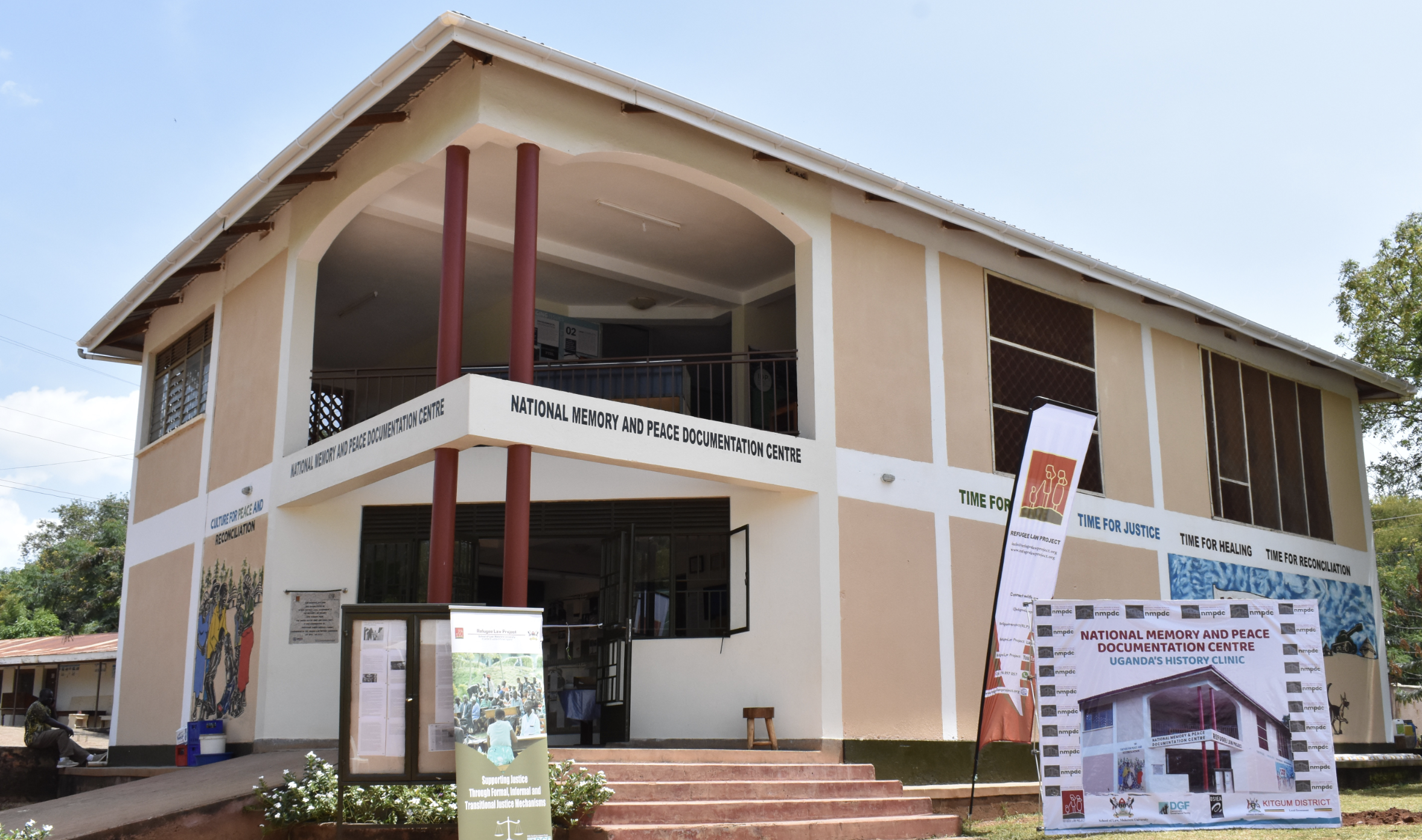
The National Memory & Peace Documentation Centre (NMPDC), an initiative in close collaboration with Kitgum District Local Government aims to be a living memorial of Uganda’s multiple conflicts. NMPDC collects, organises, archives and communicates Uganda’s conflict related memories and efforts made towards justice and reconciliation. It does so through community outreach, research and documenation.
The NMPDC documents, archives and communicates memories of conflict-related events as well as experiences of past human rights violations or abuses and legacies of violence.
NMPDC also known as Uganda’s History Clinic- is a living memorial to the victims and survivors of war, armed conflicts and gross human rights violations, a space to promote and celebrate Uganda’s heritage.
NMPDC serves as a documentation and educational facility which integrates history, education, culture, remembrance and human rights in to one space where memories live and memorialisation interfaces with the past.
Vision:
Ensure that Uganda as a country is united by its future and not divided by its past; a country where people work and live together in harmony, prosperity and peace under democratic, transparent and accountable government which respects the rule of law and uphold human rights and dignity
Goals:
- Challenge the one-sided narrative of Uganda’s conflict history and paint a more holistic picture of what happened based on available documentation and memories of those who experienced it;
- Provide war-affected communities with a platform for dialogue and remembrance;
- Ignite and facilitate a national dialogue to enable and promote healing, understanding, solidarity and accountability among the communities
- Establish a museum as walking path to facilitate healing
Overall Objective
- To become a central information collection and dissemination hub particularly on matters relating to conflict
Specific Objectives
- Provide war affected communities with a platform where they can share their memories and voice their concerns;
Give effect to the right of Ugandan citizens to holistic and unbiased information about their recent history;
Give acknowledgment to the war-affected population for their past suffering by recording their memories and sharing these with their fellow citizens, their government and the international community through online and physical archive, outreach activities, a Museum and exhibitions;
Promote documentation, preservation and memorialisation of the past events as a resource for the future;
Create the necessary archival resources to support national truth seeking, accountability and healing process
NMPDC Programming:
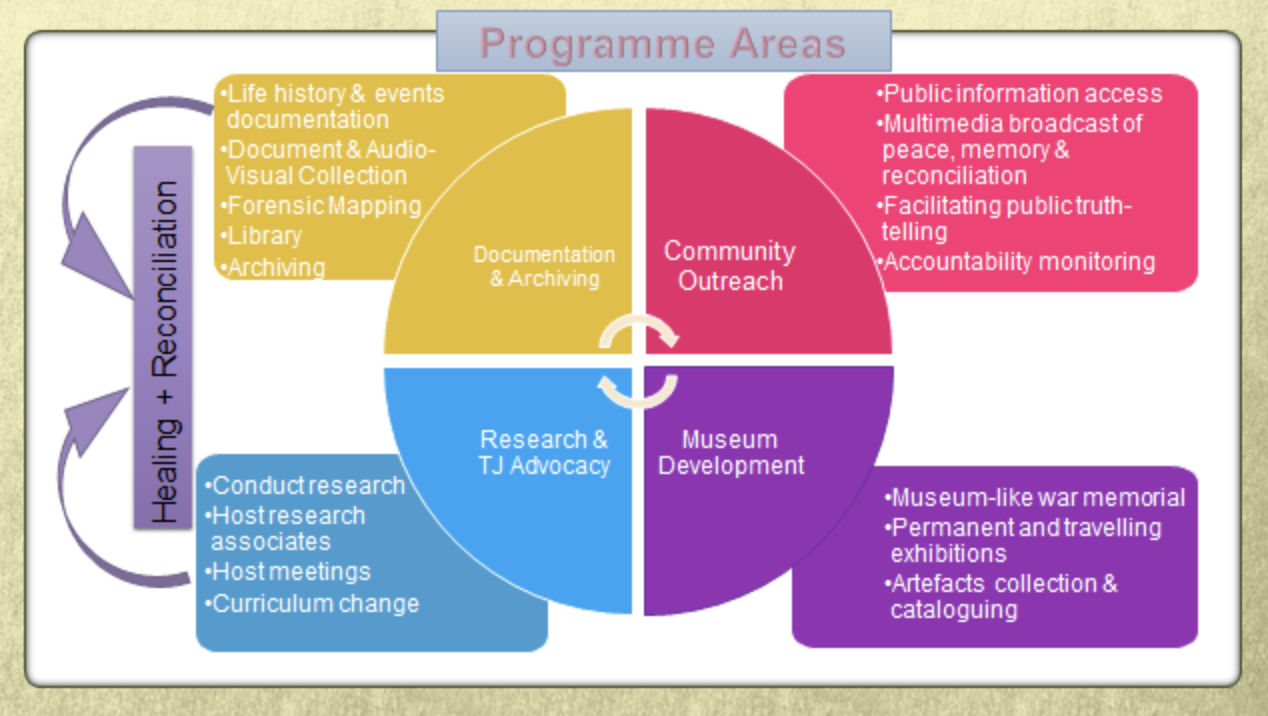
NMPDC uses the freedom and rights guaranteed and international rights law as tools to operate along four interrelated programming areas:
Documentation and Archiving:
Collect, Record, Organise, Preserve and continuously analyse information related to conflict, including its causes, consequences and the search for solutions through appropriate Transitional Justice mechanisms
Community Outreach:
Engaging communities in facilitating and participating in processes of accountability, justice and reconciliation through dialogue
Museum Development:
Establishing a museum as a walking path and space that facilitates the healing process at both individual and communal levels
Research and Transitional Justice Advocacy:
Engaging in action based research on key transitional discourse to inform TJ advocacy on issues raised by survivors/victims of war
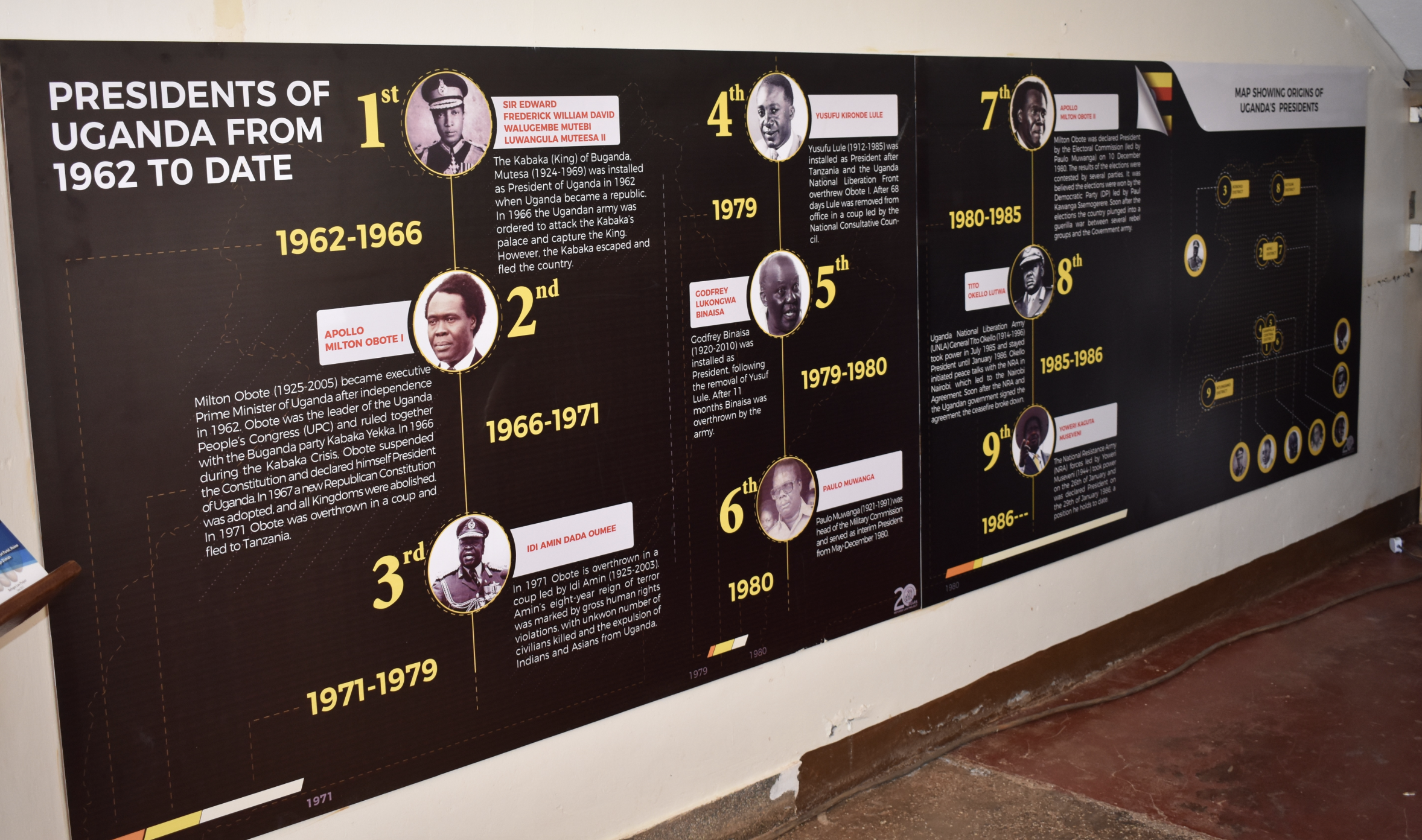
NMPDC Exhibitions 2013 to-date
Officially opened in April 2011 with support from Northern Uganda Transition Initiative, with Bart Kakooza, the Chairperson Law Reform Commission (as he then was) officiating the opening, the Center has seen the coming of age of 2 themed exhibitions:
January 2013 to April 2019: Showcased a display entitled ‘7 years of Peace’, this exhibition focused on the Lord’s Resistance Army conflict in Northern Uganda. The exhibition was revamped in 2019 giving way to a broader exhibition merging the often isolated fields of Transitional Justice and Forced Migration within the Great Lakes region of East Africa.
September 2019 to-date: the current Exhibition on display under the theme ‘The Past’, ‘Harms of War’, ‘Transitional Justice Engagements’ and ‘Emerging Issues’ was launched on September 2019 displaying RLP’s work and documentation under these sub-themes.
The Beyond Juba Project (BJP)
The Beyond Juba Project, now in its second phase, is a cutting edge transitional justice project providing support to survivors, backed by research and documentation under the NMPDC, development of appropriate transitional justice mechanisms, catalysing civil society voices and multi-layered stakeholders engagement, including through the annual Institute for African Transitional Justice (IATJ).
Institute for African Transitional Justice
The RLP in collaboration with the African Transitional Justice Research Network (ATJRN), and the Centre for the Study of Violence and Reconciliation (CSVR) established an Institute for African Transitional Justice (IATJ) in May 2010. The Institute's mandate is to conduct an annual week-long residential course on transitional justice.